Our History
The Journey of the Franciscan Sisters of Siessen in South Africa
1853: Foundations in Germany
The story of our congregation began vividly through the vision of Father Joseph Kuonz, a school inspector in Dieterskirch, who recognized an urgent need for a genuinely moral, religious, and Catholic education for young women. Shared with local families and chaplains, this dream began to come to life through a determined young woman, Franziska Frankenhauser, who trained as a teacher and prepared the foundational site in Oggelsbeuren.
On 15 November 1853, the Episcopal Ordinariate in Rottenburg officially approved the founding of an independent cooperative of school sisters. Shortly after, on March 2, 1854, four pioneering Sisters from the Dillingen Monastery moved into the makeshift convent at Oggelsbeuren to carry out this lifelong task.
- Mother M. Seraphina Model
- Mother M. Clementia Mühleisen
- Mother M. Johanna Nepomucena Strobel
- Mother M. Agatha Weiss
On May 1, 1854, they officially opened their doors to their first 17 pupils.
On 2 March 1854, the congregation and boarding school relocated to the historic site of Siessen. The first clothing ceremony took place on 6 June 1854, where Franziska Frankenhauser received her habit as Sr. M. Antonia, later serving faithfully as Mother General until her passing on 10 July 1866.
Tested by Global Conflicts & Change
The onset of both World Wars presented immense burdens and transformations for the Congregation. During World War I, the Motherhouse and larger facilities were converted into military hospitals to care for wounded and recovering soldiers. Young girls in handwork classes produced protective laundry and dressings for the front lines, while Sisters labored tirelessly in local agricultural fields to replace the fathers and sons who had been drafted.
Following the war, teacher reductions in German elementary schools threatened our foundational school order. Trusting in divine providence, the Sisters turned to a new apostolate: nursing. Retrained teachers and trained nurses supplied rural communities, eventually managing over 40 medical stations, including care for children with tuberculosis in Wangen from 1928.
The unstable political landscape of the Weimar period and the early rumblings of the National Socialist dictatorship—combined with a renewed, vibrant missionary enthusiasm—ultimately pushed the congregation to look far beyond domestic borders toward foreign missions.
1932: Reaching African Soil
While the congregation had previously declined invitations to work abroad due to the high demand for sisters within Germany, the mission-minded Superior General, Mother M. Gertrudis Bosch, recognized the shifting times. In response to an urgent appeal from South Africa, the congregation took a courageous leap of faith.
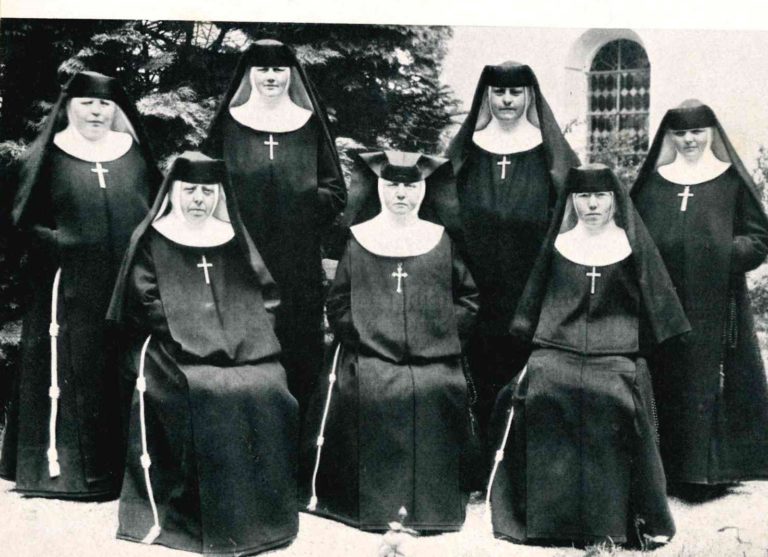
On 4 August 1932, six Franciscan Sisters of Siessen boarded a ship from Germany, arriving on African soil on 7 September 1932. They came at the request of Bishop H. J. Meysing OMI (who later became the first Archbishop of Bloemfontein) to serve what was then the vast Vicariate of Kimberley—an expansive territory stretching from the borders of Lesotho far north into Botswana.
1943: Settling at Assisi Mission
The early years in South Africa were marked by constant movement and pioneering obstacles. To introduce themselves to missionary conditions, the Sisters initially worked in Mafikeng, Taung, and alongside the Sisters of the Holy Cross in Aliwal North. In their search for a permanent home base, they moved through several regions, including brief periods in Botswana.
A definitive milestone was reached in 1943 when the congregation successfully acquired Fort Savage Farm in the Archdiocese of Bloemfontein. Providing a livelihood and a stable home base, the Sisters beautifully renamed the property Assisi. At Assisi, they rapidly established a thriving mission school, a dedicated hospital ward, and an essential maternity home to care for the physical and spiritual well-being of the local population.
A Grace-Filled Worldwide Congregation
GERMANY (1854) • SOUTH AFRICA (1932) • BRAZIL (1936) • ITALY (1987) • SWEDEN (2010)
A Growing & Unified Community
A beautiful challenge facing our early community was introducing, shaping, and consolidating religious life among local women. The congregation naturally began attracting mainly African vocations. To integrate missionary personnel with local vocations successfully, the Sisters focused heavily on raising educational standards across the region and fostering a deeply robust, shared Franciscan spirituality.
Great was the spiritual joy when the local community took permanent root on 19 October 1952 with the consecration of our first four African novices. Since that monumental moment, our Province has enjoyed a steady flow of local vocations. Today, our community is beautifully international, comprising sisters primarily from South Africa and Lesotho living a humble, hardworking lifestyle among the lowly.
Currently operating across four key dioceses—Kimberley, Bloemfontein, Kroonstad, and Johannesburg—we look back at our past with profound gratitude and forward to a bright future built upon our solid core values: devotion, obedience, poverty, and chastity.